
The Ultimate Guide to Custom Software Development in 2025
The ever-evolving customer needs and technology are constantly changing, pushing businesses to update their systems to stay current. In this fast-paced digital world, companies are looking for better ways to improve their operations. While ready-made software has helped many industries grow, it often can’t handle the specific needs of every business. This is where custom software development comes in, providing solutions tailored to address unique business challenges.
Custom software development helps businesses create solutions designed specifically for their needs. Unlike generic software that can limit growth, custom software offers endless possibilities. It lets companies improve their systems, work more efficiently, and stay ahead of the competition.
Grand View Research reports that the global custom software development market will reach $146.18 billion by 2030, driven by a projected compound annual growth rate (CAGR) of 22.5%.
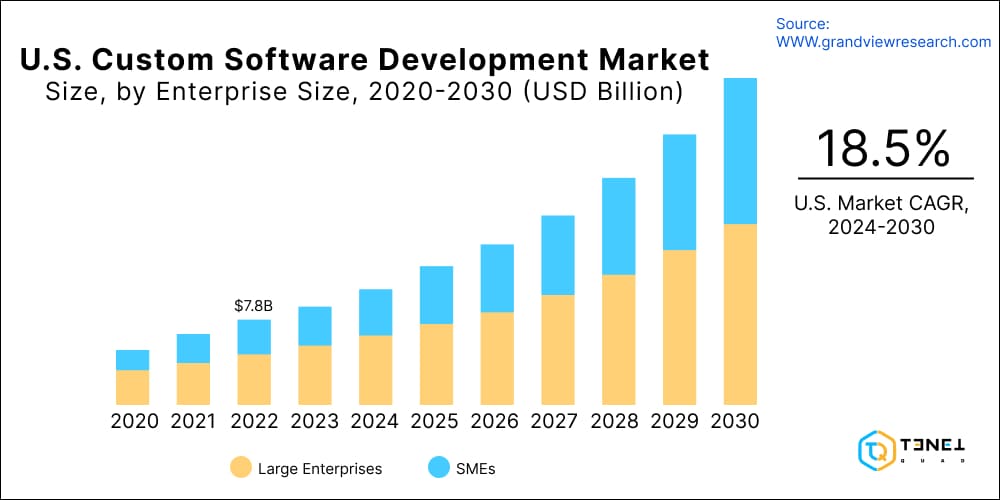
Custom software development involves planning, designing, building, and launching digital solutions tailored to the specific needs of a particular organization, user group, or function. For example, developers build a banking app to meet the unique needs of a bank and its customers, and they create a healthcare app to serve the needs of patients and medical professionals.
Custom software development helps businesses across all industries streamline operations, improve customer experience, and stay ahead of the competition. It also helps identify customer challenges and anticipate future needs.
Given the many advantages of customized software application development, here is a full examination of why customized solutions have become a critical component of the modern business environment.
Off-The-Shelf Software vs. Custom Software Development
Commercial Off-The-Shelf software (COTS) refers to pre-packaged software with standard features designed for general use. The vendor that develops the software manages updates, and businesses access it by paying a licensing fee. COTS is built to address the common needs of a wide audience. For example, Zoom, a popular online meeting and video conferencing tool, gained significant attention during the global lockdown era.
On the other hand, software created by a custom development company to meet your specific needs is known as custom or bespoke software. Built to order, it focuses entirely on features tailored to your unique requirements.
Custom software solutions can complete tasks much faster than standard software. Think of it like this: COTS is like a public bus, designed to accommodate the general needs of all passengers and move at a moderate speed to suit everyone. In contrast, custom software is like a private car, allowing you to set the destination, control the pace, and go as fast as you need.
Here are the differences between off-the-shelf and custom solutions:
| Custom Software | Off-The-Shelf Software |
| Developers build it to meet specific user needs. | Developers design it to serve a broad range of users. |
| Although it may be costly, it offers scalability and flexibility, making it easy to tailor to your goals. | It is cost-effective, but you can’t modify it to suit your specific needs. |
| Instead of packing in unnecessary features, it focuses only on what the user truly needs. | Developers add many features, but most may not be useful to every user. |
| The company retains full rights to modify and maintain the software. | The company relies on external software providers for updates and maintenance. |
In today’s fast-changing digital world, off-the-shelf software often fails to meet the market’s evolving needs. This is why more businesses are choosing custom software development to stay ahead of the competition.

What Are the Advantages of Custom Software Development?
Custom software development offers numerous advantages to businesses, including streamlining processes, increasing productivity, improving customer experiences, and achieving business goals. Here are some key benefits of custom software development that businesses can gain by opting for custom solutions instead of off-the-shelf software.
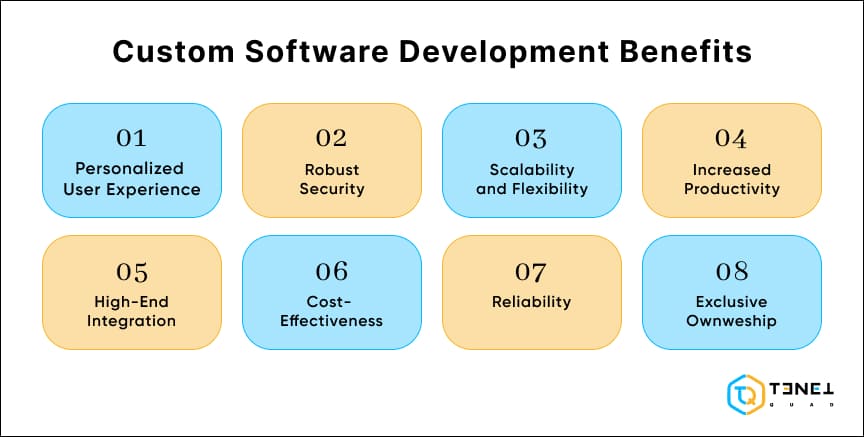
Personalized User Experience
Today, users expect personalized interactions with brands, and custom software development is designed to deliver just that. Unlike COTS software, which serves a broad audience, custom solutions are tailored to address unique challenges and meet specific business needs. Built with features and technologies chosen to suit your goals, custom software helps organizations stand out and gain a competitive edge in their industries.
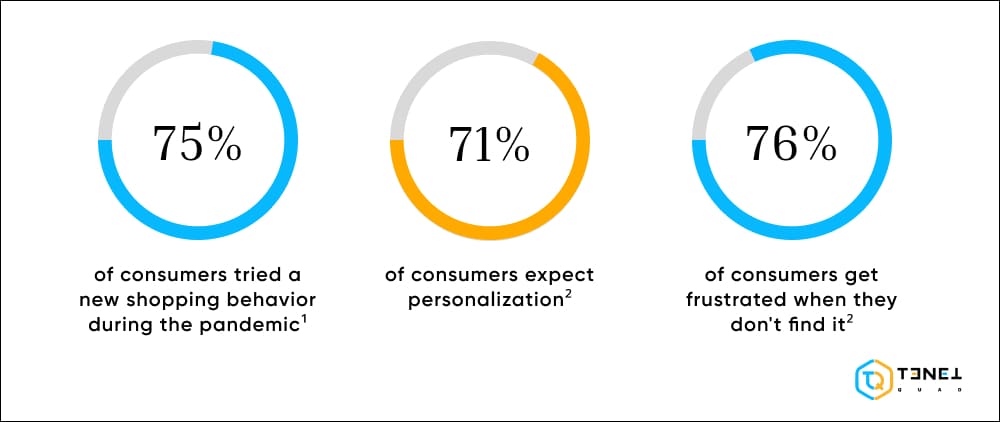
According to McKinsey, 71% of customers expect brands to provide personalized solutions, and 76% feel frustrated when companies fail to meet this expectation. With the growing demand for personalized experiences, custom software development has become essential for businesses looking to gain a competitive edge.
Robust Security
Custom application software offers stronger security compared to off-the-shelf software. As a closed source project, it is exclusively used by your team, significantly reducing the risk of unauthorized access. In contrast, COTS software often relies on open-source code, making it more susceptible to hacking, as attackers are familiar with its vulnerabilities.
Scalability and Flexibility
Custom software gives organizations the flexibility to scale up or down based on their business needs. Unlike off-the-shelf applications, it can be tailored to specific requirements without the limitations or risks associated with licensing agreements.
Increased Productivity
Custom software development focuses on streamlining and automating business processes, enabling businesses to increase productivity and stay competitive. By minimizing manual work and reducing the risk of human errors, custom solutions enhance operational efficiency, improve customer experiences, and support the delivery of innovative products or services.
High-End Integration
Investing in COTS software can be a catch-22, as it often requires additional programming to add extensions and make it truly useful. By putting the same effort into developing custom software that integrates seamlessly with your system, you can save time, money, and energy.
Cost-Effectiveness
Custom software allows you to plan the development process at your convenience. Instead of making a large upfront investment, you can automate one process at a time based on your business plan and budget. This approach lets you schedule additional automation stages, making custom software development more affordable and manageable.
Reliability
Software reliability is essential for every organization, and custom software development offers a secure and dependable way to streamline operations. Developers leverage advanced technologies and industry-leading protocols to build secure applications, ensuring top-tier performance and reliability.
Exclusive Ownership
Custom software development gives you full ownership and control, allowing you to modify and maintain the product as needed to adapt to changing market demands. If any issues arise with your software, you can rely on your development team for prompt and efficient technical support to address and resolve them quickly.
What Are the Different Types of Custom Software Development?
There are many types of custom software development designed to meet the diverse needs of businesses across various industries. Here are some of the most common types of custom software development that companies can leverage to streamline operations and enhance customer value.

Video Streaming Software
In today’s fast-changing digital world, streaming platforms have become one of the most widely used types of custom software. They are popular among users of all ages and interests, offering the ability to stream content online or download it for offline viewing.
A prime example of such a custom platform is Netflix, which offers users exclusive access to movies and series. Another example is YouTube, where users can watch videos and create their own content.
Customer Relationship Management (CRM)
It is one of the most popular types of software businesses use to reinforce their relations with customers. Salesforce can be one of the best examples of CRM software.
Enterprise Resource Planning (ERP)
This type of custom enterprise software helps manage business workflows in real time. Organizations commonly use ERP solutions to collect, manage, store, and analyze data across various business functions.
Content Management Systems (CMS)
Content management software, such as WordPress, enables organizations to design, update, and edit different types of content on their websites with ease.
Fintech Software
Fintech software is essential for financial institutions and their customers, enabling them to manage banking activities, digital wallets, crowdfunding, cryptocurrency investments, and more. Secure fintech solutions help financial firms enhance user experiences while protecting customers from fraud and data theft.
Operations Management Software
Companies can use this software to automate key business processes and optimize operations. These digital solutions can be customized to align with specific project goals.
Healthcare Software
Healthcare software is a valuable tool for both medical professionals and patients. It helps manage patient records, schedule appointments, create personalized treatment plans, arrange doctor visits, and much more.
eCommerce Software
This is one of the most popular types of custom software development, designed to help businesses grow their online presence and achieve higher ROI. It is tailored to streamline online sales, manage inventory, expand market reach, build brand awareness, engage customers, and run effective marketing campaigns, among other functions.
A great example of eCommerce software is the Amazon app for Android and iOS. This global tech company offers a wide range of eCommerce services, advertising, cloud computing, and AI, providing users with a secure and convenient shopping experience.
The Step-by-Step Process of Custom Software Development
Custom software product development is a complex and challenging process that demands the technical expertise of a leading custom software development company. Below is a step-by-step guide to the custom software development process.
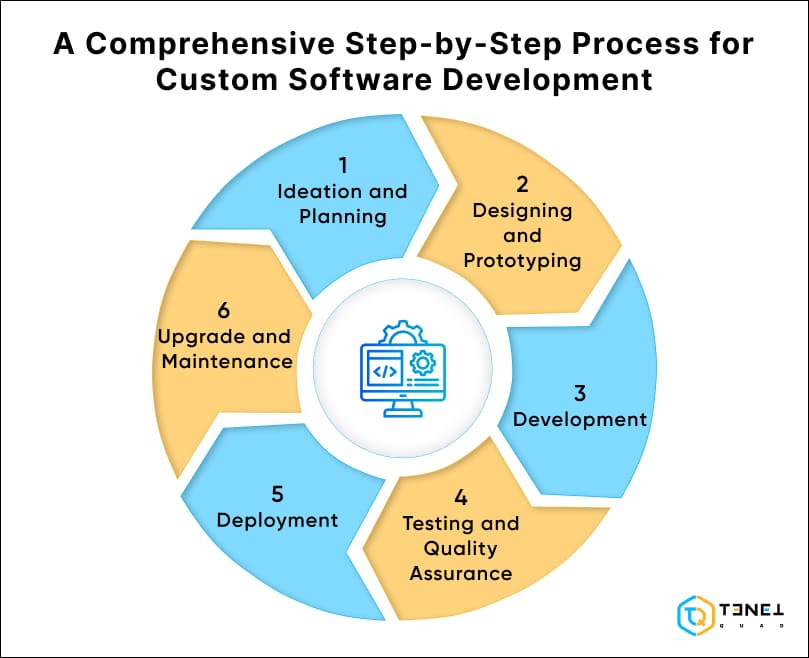
Ideation and Planning
The first step in custom software development is understanding the business requirements, risks, and objectives. A custom software development consultant works closely with the client to gather information, analyze market trends, define business needs, and create a detailed plan for the development process.
Designing and Prototyping
After gathering the necessary information and identifying the requirements, the next step is to design an intuitive user interface and create prototypes. This stage involves building a visual representation of the software, allowing stakeholders to provide feedback and suggest changes before proceeding with the final development.
Development
This crucial stage involves writing code and programming the software based on the approved prototypes. Developers use advanced methodologies and cutting-edge technologies to ensure the software meets top security and performance standards.
Testing and Quality Assurance
This stage involves rigorous testing to ensure the software is secure, user-friendly, and free of bugs. To guarantee top-quality performance, tech experts perform various tests, including performance, functional, and security testing. If any errors or glitches are identified during testing, they are promptly resolved before the product is launched.
Deployment
After the software passes all testing phases, it is ready for launch. A reliable custom software development company ensures the final product is seamlessly integrated into the company’s infrastructure or submitted to the app store for a successful release.
Upgrade and Maintenance
After the software is developed and deployed, regular maintenance and upgrades are essential to ensure it remains effective and performs optimally. This stage includes implementing updates, fixing bugs, and providing ongoing support as needed.
Custom business software development is an ongoing process. While some companies rely on their in-house development teams, Tenet Quad has found that outsourcing custom mobile software development can greatly reduce costs, enhance flexibility, boost efficiency, accelerate timelines, and foster innovation. By outsourcing, businesses can improve software performance while concentrating on their core operations.
According to Deloitte’s global outsourcing survey, 70% of organizations choose outsourcing primarily to reduce costs.
Outsourcing to a top custom software development company offers numerous benefits to businesses, including expert guidance throughout the development process. This is why offshore custom software development firms are becoming increasingly popular.
What Does Custom Software Development Cost?
The cost of custom software development is a key consideration for anyone looking to build their own digital products. However, providing an exact estimate is challenging, as the cost varies based on several factors. On average, custom software development can range from $30,000 to $200,000 or more, depending on your industry and specific business requirements.
Each custom project is unique, as businesses operate in different industries with specific requirements and goals. As a result, the features and functionalities of custom solutions vary, which significantly impacts the cost of development. For example, software designed for healthcare organizations will have entirely different features and purposes than software built for the finance sector.
Factors Influencing the Cost of Custom Software Development
Accurately estimating the cost of custom software development can be challenging due to the many factors that influence its success. Below is a detailed list of key factors that impact the overall cost of developing a custom solution.
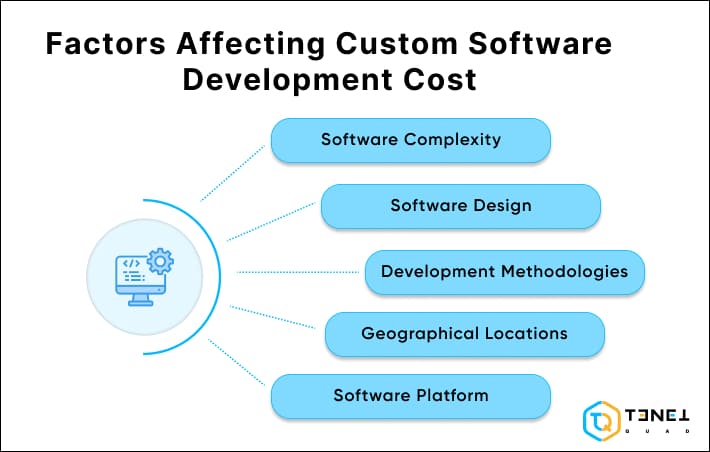
Software Complexity
Software complexity is a major factor influencing custom software development costs. It reflects the level of effort developers need to invest in creating the software. Larger projects with numerous features generally cost more than smaller ones with fewer features. The more complex your software, the higher the development cost will be.
Software Design
Another key factor influencing software cost is its UI/UX design, architectural design, and overall layout. A product’s interface should be user-friendly and engaging to ensure a seamless user experience. The more intricate and detailed the design, the more it appeals to end users, which can increase development costs.
Development Methodologies
Various methodologies and approaches are used for software development, such as Agile, Spiral, Waterfall, Hybrid, and iterative models. These methodologies influence the software’s usability, robustness, and scalability. Each approach has its own advantages, disadvantages, and associated costs, as they differ in how they work and are implemented.
Geographical Location
The cost of custom software development can vary greatly based on the geographical location of the offshore development company you choose.
One effective strategy to optimize the development budget is outsourcing tasks to regions like India. These areas offer highly skilled development teams that deliver top-quality solutions at competitive costs. Leveraging the expertise, resources, and technologies available in Asian countries can significantly enhance project efficiency while keeping costs under control.
With the growing trend of global talent acquisition, development teams in Asian countries are well-versed in meeting both international and local compliance standards. Partnering with a team in these regions can effectively address complex development challenges while ensuring cost efficiency.
Below are estimated hourly development rates across various regions, which play a significant role in determining the cost of custom software development.
| REGION | HOURLY RATES OF DEVELOPMENT |
| UAE | $60 Το $65 |
| US | $95 Το $100 |
| Western Europe | $80 Το $90 |
| Australia | $70 Το $90 |
| Eastern Europe | $50 Το $55 |
| Asia | $25 To $40 |
Software Platform
The platform you choose for your custom solution significantly impacts development costs. Generally, there are three main types of platform-based software development: iOS, Android, and multi-platform. The choice of platform should align with market trends and user preferences.
How Can Tenet Quad Support Your Custom Software Development Journey?
With extensive experience in delivering high-quality custom software development services, we excel in leveraging emerging technologies to tackle complex business challenges.
We collaborate closely with our clients, focusing on understanding their business processes, goals, and challenges. This approach enables us to deliver cutting-edge custom solutions that align with their expectations and unique go-to-market objectives.If you’re looking for custom software development services, contact us for a journey filled with innovation and success. Our experts will guide you through every step of the process and help you create software that your customers will love and embrace.
FAQS
Q. What is custom software development?
A. Custom software development is the process of designing, developing, deploying, and maintaining software applications tailored to address specific user needs and business challenges, offering a competitive edge.
Q. How much does custom software development cost?
A. The cost of custom software development typically ranges from $40,000 to $300,000 or more, depending on factors like project scope, complexity, and required features.
Q. How long does the development of custom software typically take?
A. The timeline for custom software development depends on the project’s complexity, scope, and requirements. On average, it can take anywhere from a few months to over a year to complete.
Q. What are some common challenges encountered during custom software development?
A. Organizations often encounter various challenges during custom software development, such as evolving requirements, technical complexities, resource limitations, and communication gaps. Changing requirements, driven by shifting business needs or user feedback, can impact timelines and budgets. Technical challenges, like system integration or adopting new technologies, may demand innovative solutions. Resource constraints, including limited budgets or talent shortages, can further complicate the process. To overcome these hurdles and ensure successful software delivery, effective project management, proactive planning, and clear communication among stakeholders are crucial.